Condenser vs Dynamic Microphones
One is sensitive and detailed, the other is rugged and forgiving. Choosing the right one is the single biggest factor in how you sound.
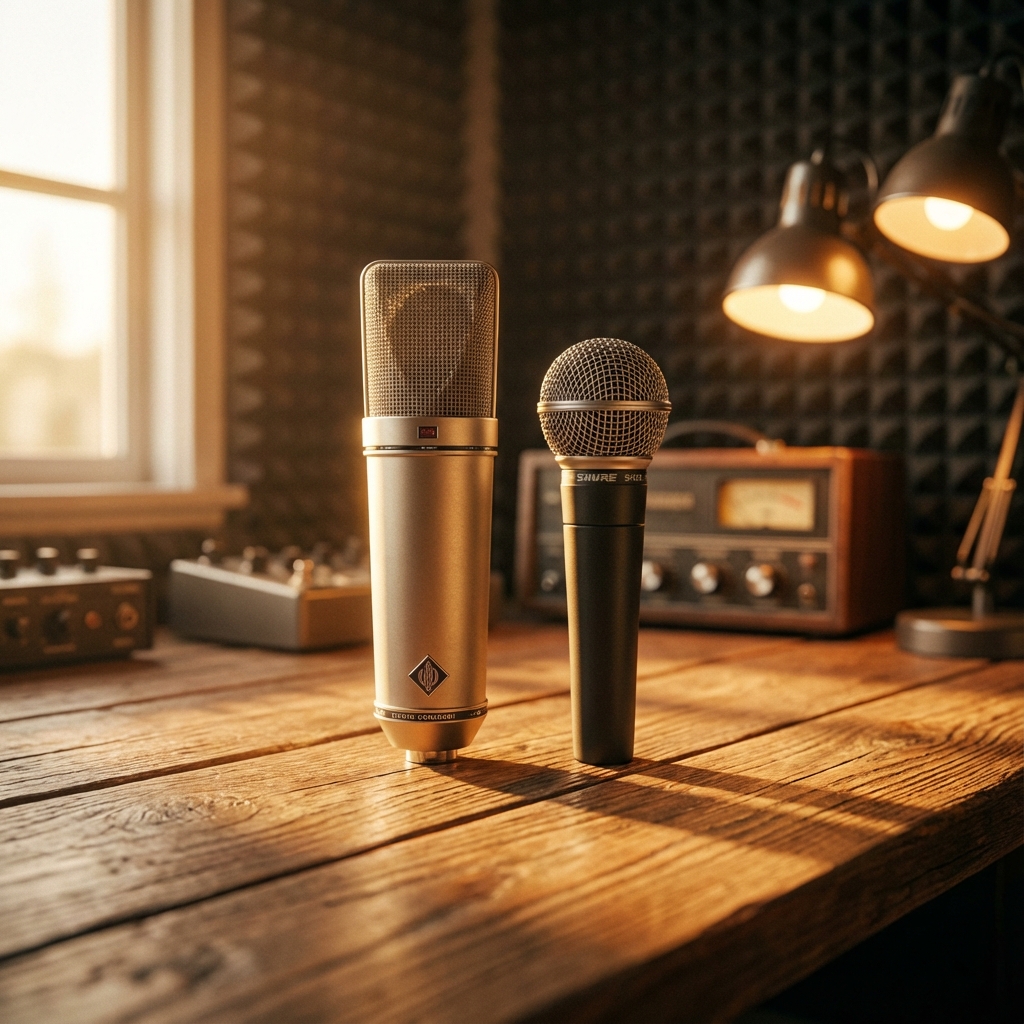
When buying a microphone for streaming, podcasting, or music, you're immediately faced with a choice: Condenser or Dynamic? It's not just about price; these two types of mics work differently and are built for completely different environments.
Pick the wrong one, and you might pick up every car driving by your house (Condenser) or sound muffled and quiet (Dynamic). Let's break down the differences so you can choose the right tool for the job.
The Dynamic Microphone
Best For:
Untreated rooms, loud environments, live vocals, and close-up speech.
Dynamic microphones (like the Shure SM7B or SM58) are the workhorses of the audio world. They are less sensitive than condensers, which is actually a huge advantage for most home users.
Because they are less sensitive to high frequencies and distant sounds, they naturally reject background noise like keyboard clicks, fans, and room echo. If you don't have a soundproof recording studio, a dynamic mic is usually the safer bet.
Pros:
- Noise Rejection: Excellent at ignoring background noise.
- Durability: Built like tanks. You can drop them and they'll likely survive.
- No Power Needed: XLR versions don't require Phantom Power (48V).
Cons:
- Low Sensitivity: You need to speak right up against the mic.
- Gain Hungry: You might need a powerful preamp (or a "Cloudlifter") to get a loud enough signal.
- Less Detail: Can sound "darker" and less crisp than a condenser.
The Condenser Microphone
Best For:
Quiet studios, capturing subtle details, singing, and ASMR.
Condenser microphones (like the Blue Yeti or Audio-Technica AT2020) are highly sensitive. They detect sound using a lightweight diaphragm that moves with the slightest air pressure changes.
They provide that crisp, "radio-ready" Sound with lots of high-end detail. However, this sensitivity is a double-edged sword. If your dog barks three rooms away, a condenser mic will hear it.
Pros:
- Incredible Detail: Captures the "air" and nuances of your voice perfectly.
- High Output: They are loud and don't need much gain.
- Crisp Sound: Great for that professional studio sound... if your room is quiet.
Cons:
- Picks Up Everything: Room echo, mouse clicks, and outside traffic will be audible.
- Fragile: More delicate than dynamic mics.
- Requires Power: XLR versions need 48V Phantom Power.
The Verdict
Which one should you buy?
- Buy a DYNAMIC Mic if: You are recording in a bedroom, have a noisy PC, live on a busy street, or want that "broadcast" radio voice.
- Buy a CONDENSER Mic if: You have a quiet, treated room (sound panels) and want to capture the highest fidelity possible for singing or voice acting.
Ready to test your current gear?
Find out how your current microphone sounds with our professional tools.
Start Mic Test